GE Refrigerator Repair in Ottawa
GE refrigerators are known for reliable performance, but like any appliance, they can develop cooling problems, water leaks, frost buildup, ice maker failures, and temperature control issues over time. Whether your GE refrigerator is not cooling properly, making unusual noises, running constantly, or displaying an error code, prompt diagnosis can help prevent food spoilage and more expensive repairs.
YANFIX provides GE refrigerator repair in Ottawa for common and complex refrigeration problems. We diagnose the cause, test critical components, and restore proper cooling performance so your refrigerator operates safely and efficiently again.
WHAT PROBLEM ARE YOU EXPERIENCING?
Our local refrigerator repair technicians are on standby, ready to solve your problem today. We offer same-day refrigerator repair in Ottawa for these issues and more.
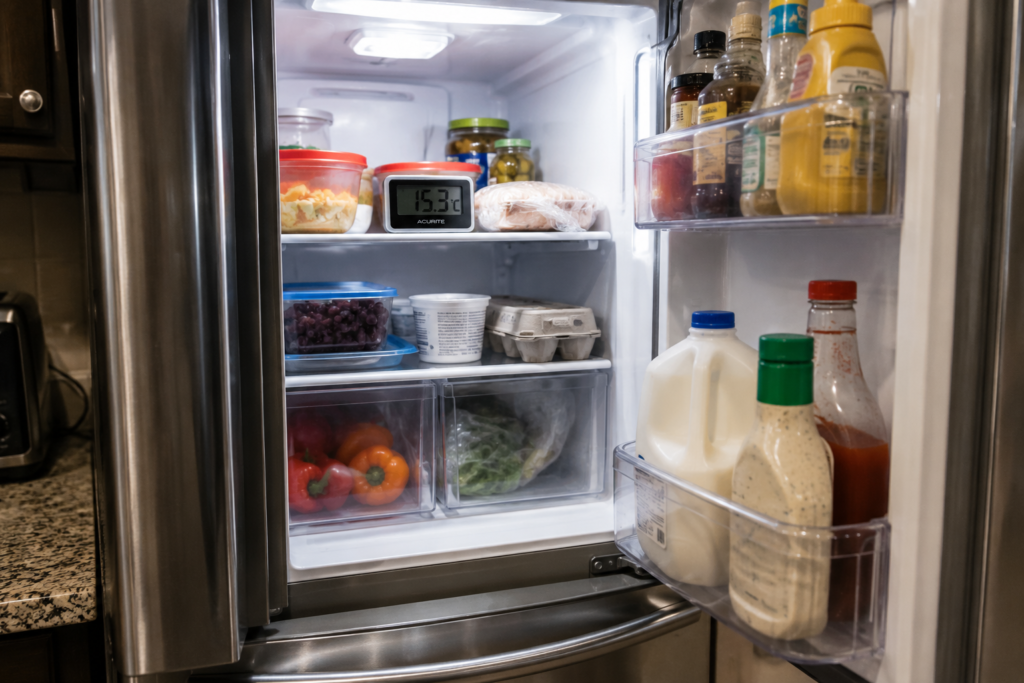
A GE refrigerator that is not cooling properly can quickly lead to food spoilage and unsafe storage temperatures. Homeowners may notice warm drinks, soft frozen food, or weak airflow from interior vents. Common causes include a failed evaporator fan motor, dirty condenser coils, a defective thermistor, or a malfunctioning control board. Some cooling problems develop gradually, while others appear suddenly after a component failure. Professional diagnosis helps identify the exact cause before additional refrigeration components are affected.
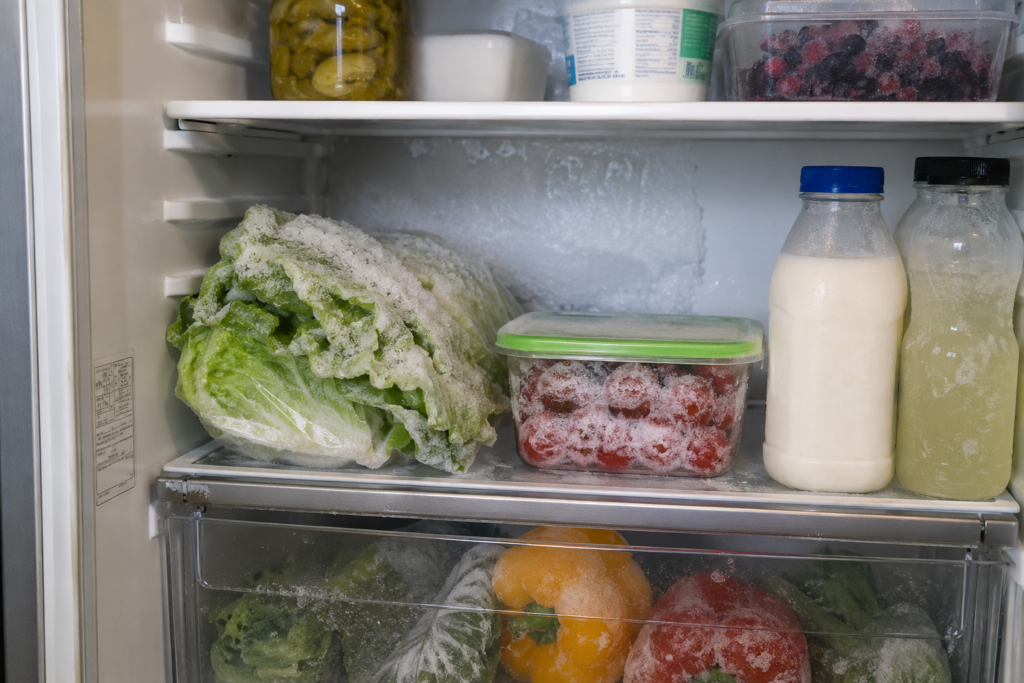
Food freezing inside the fresh food compartment is often caused by incorrect temperature regulation rather than excessive cooling capacity. GE refrigerators may develop this problem when a thermistor provides inaccurate readings, a damper assembly remains open, or the electronic control system fails to regulate airflow correctly. Vegetables, dairy products, and beverages are usually affected first. If ignored, freezing can become more severe and lead to inconsistent temperatures throughout the refrigerator compartment.
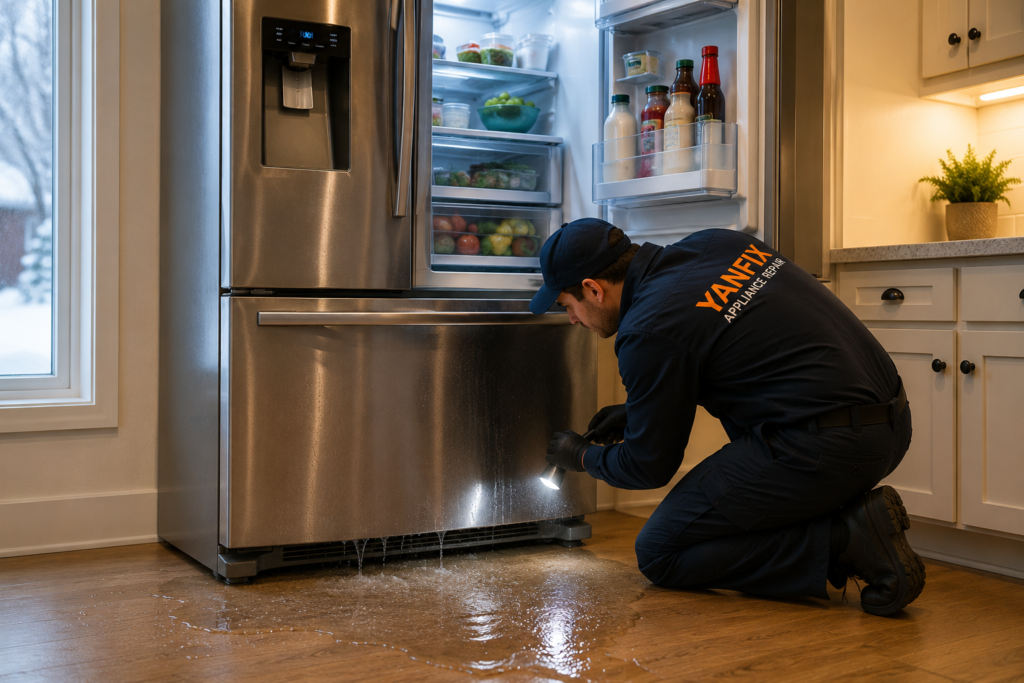
Water leaking from a GE refrigerator can appear beneath the appliance, inside drawers, or near the freezer compartment. The most common causes include a clogged defrost drain, frozen drain channel, damaged water tubing, or a failing water supply connection. Even a small leak can damage flooring, cabinets, and surrounding materials over time. Diagnosing the source of the leak requires inspection of both the drainage system and water supply components to prevent recurring water accumulation.
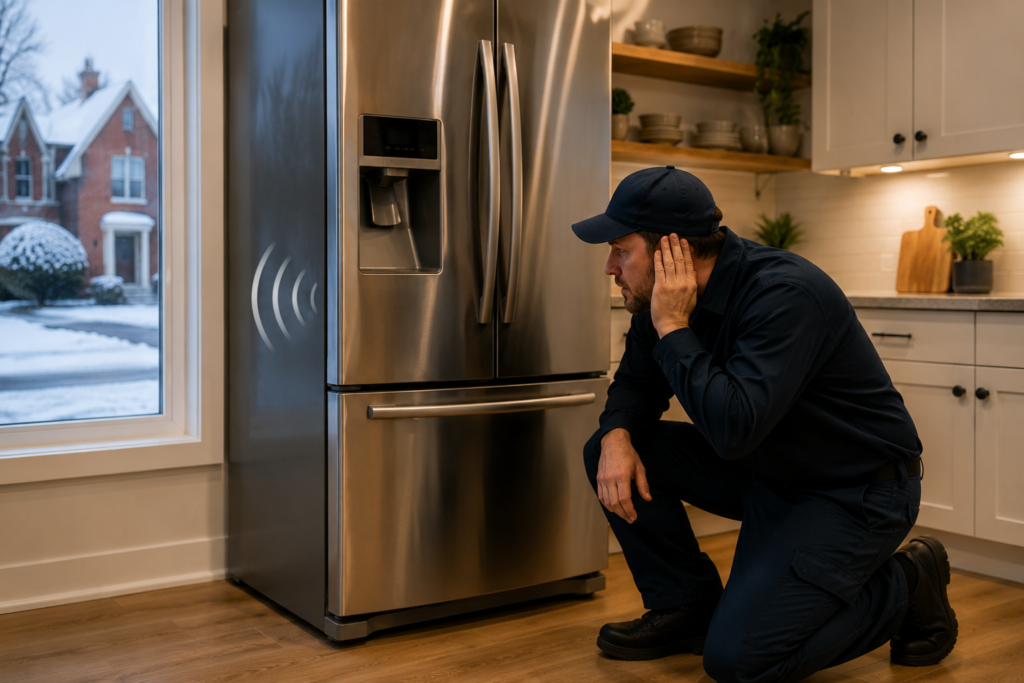
Unusual noises coming from a GE refrigerator may include buzzing, clicking, rattling, grinding, or vibrating sounds. While some operating noises are normal, sudden changes often indicate a mechanical issue. Common sources include evaporator fan motors, condenser fan motors, compressor start components, or loose internal parts. Noise problems frequently become worse over time as components continue to wear. Identifying the exact source of the sound helps prevent larger cooling and refrigeration system failures.
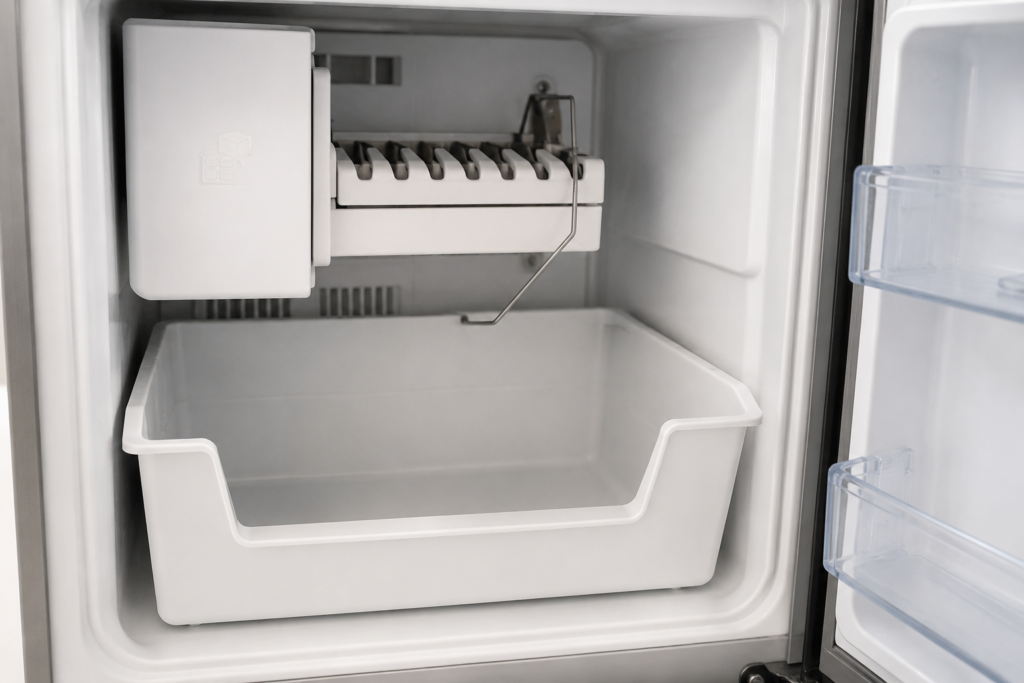
A GE refrigerator ice maker may stop producing ice completely or generate only a small amount of ice each day. Common causes include a defective water inlet valve, frozen fill tube, faulty ice maker assembly, low water pressure, or sensor-related failures. Because several components work together during the ice production cycle, proper testing is necessary to determine where the interruption occurs. Early diagnosis often prevents additional dispenser and water system problems from developing.
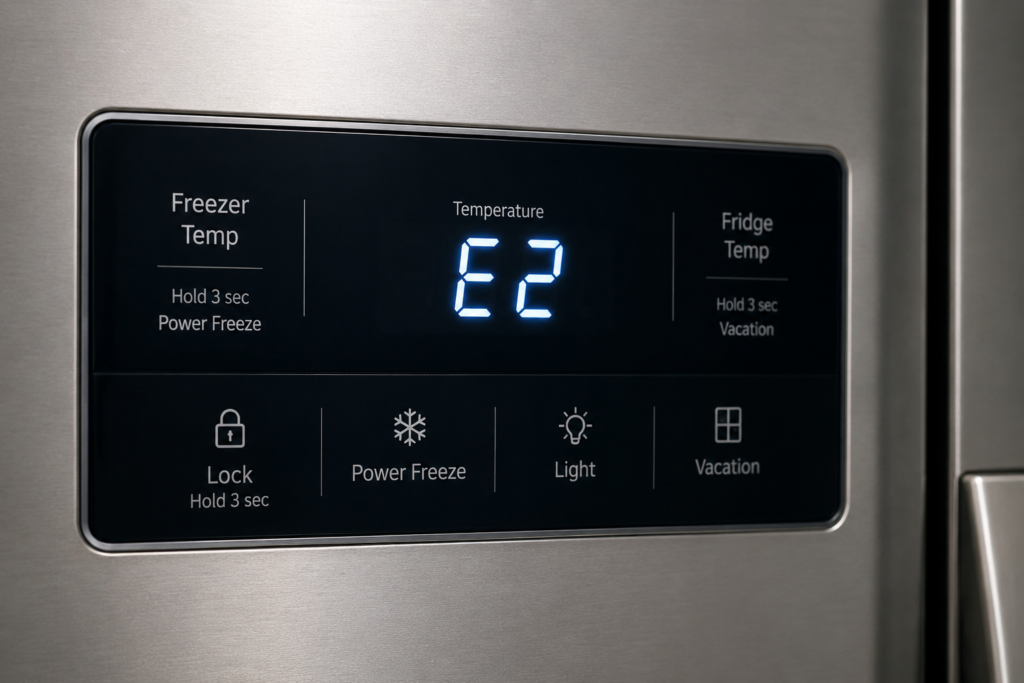
GE refrigerator error codes are designed to alert homeowners to sensor failures, fan problems, communication faults, and other system issues. While the refrigerator may continue operating temporarily, many error codes indicate conditions that can eventually affect cooling performance or food preservation. Understanding the meaning of a specific code helps narrow the diagnosis process and identify the affected component. Error code troubleshooting should always be combined with testing to confirm the actual source of the problem.
COMMON GE REFRIGERATOR PROBLEMS AND CAUSES
| Cause | Symptom | Repair Required |
|---|---|---|
| Failed Evaporator Fan Motor | Refrigerator not cooling properly, weak airflow from vents | Evaporator fan motor diagnosis and replacement |
| Dirty Condenser Coils | Refrigerator runs constantly, poor cooling performance | Condenser coil cleaning and system inspection |
| Faulty Thermistor | Temperature fluctuations, food spoiling too quickly | Thermistor testing and replacement |
| Defective Damper Assembly | Freezer cold but fresh food section warm | Damper assembly diagnosis and replacement |
| Clogged Defrost Drain | Water leaking inside or underneath refrigerator | Drain cleaning and defrost system inspection |
| Failed Defrost Heater | Heavy frost buildup on freezer walls or evaporator cover | Defrost heater testing and replacement |
| Defective Water Inlet Valve | Ice maker not producing ice or slow ice production | Water valve diagnosis and replacement |
| Faulty Compressor Start Relay | Clicking noises and refrigerator not cooling | Start relay testing and replacement |
| Main Control Board Failure | Error codes, inconsistent cooling, intermittent operation | Control board diagnostics and replacement |
| Damaged Door Gasket | Condensation, frost buildup, excessive compressor runtime | Door seal inspection and replacement |
Common Bosch Refrigerator Problems and Their Causes
Our local refrigerator repair technicians are on standby, ready to solve your problem today. We offer same-day refrigerator repair in Ottawa for these issues and more.
A GE refrigerator that is not cooling properly is one of the most common refrigerator repair calls in Ottawa. Many GE models rely on thermistors, evaporator fans, and electronic control boards to regulate cooling performance. When one of these components begins to fail, temperatures may slowly rise even though the refrigerator appears to be running normally. Ottawa homeowners often notice spoiled food, warm beverages, or reduced airflow before a complete cooling failure occurs. Accurate diagnosis includes testing temperature sensors, fan operation, airflow distribution, and GE control board communication.
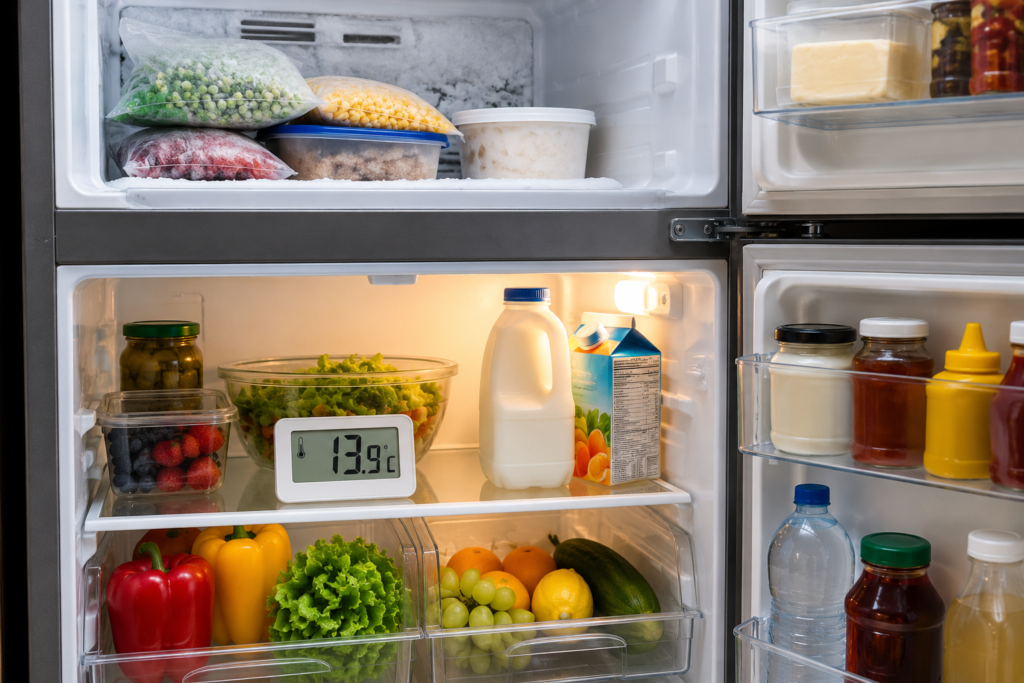
When the freezer remains cold but the refrigerator section becomes warm, a GE refrigerator is often experiencing an airflow distribution problem. Cold air produced in the freezer must be circulated throughout the appliance by the evaporator fan and controlled through the damper assembly. Frost buildup, fan motor failure, blocked air passages, or electronic control board issues can interrupt normal airflow. Many Ottawa homeowners first notice milk, vegetables, and fresh food warming while frozen products remain unaffected. Proper diagnosis focuses on airflow movement and temperature management components.
A GE refrigerator ice maker may stop producing ice completely, generate small cubes, or operate inconsistently throughout the day. GE ice systems depend on water inlet valves, fill tubes, sensors, and electronic controls working together during each production cycle. Frozen fill tubes, low water pressure, faulty valves, or failed ice maker assemblies are among the most common causes. In Ottawa homes, ice production problems often develop gradually before stopping completely. Comprehensive testing helps determine whether the fault originates in the water supply system, electrical controls, or the ice maker itself.
Water leaking from a GE refrigerator can appear beneath the appliance, inside crisper drawers, or near the freezer compartment. One of the most common causes is a blocked defrost drain that prevents melted frost from draining properly during automatic defrost cycles. GE dispenser systems, water supply tubing, and inlet valve connections can also contribute to leaks. Many Ottawa homeowners initially discover small puddles before more serious moisture damage develops. Proper diagnosis requires inspection of both the drainage system and water supply components to identify the exact source..
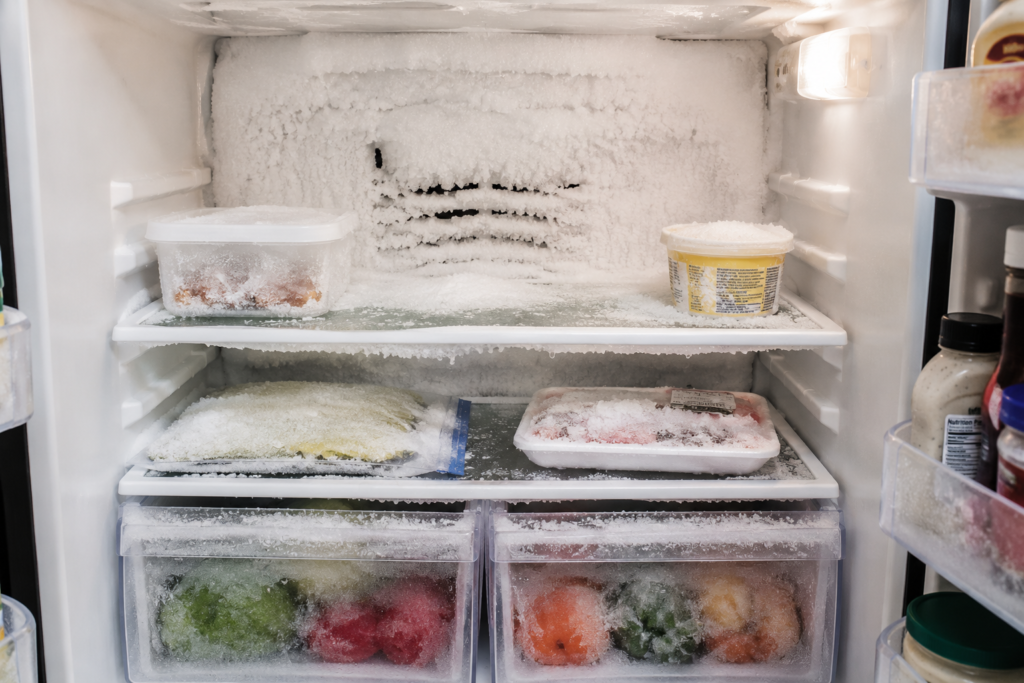
Heavy frost accumulation inside a GE refrigerator usually indicates a problem within the automatic defrost system. GE refrigerators use thermistors, defrost heaters, and electronic control boards to manage frost removal and maintain proper airflow. When one of these components fails, ice begins accumulating on the evaporator coil, eventually restricting airflow and reducing cooling performance. Ottawa homeowners often notice uneven temperatures, weak airflow, or longer compressor run times before discovering the frost itself. Removing frost manually may provide temporary relief, but the failed component must still be identified and repaired.
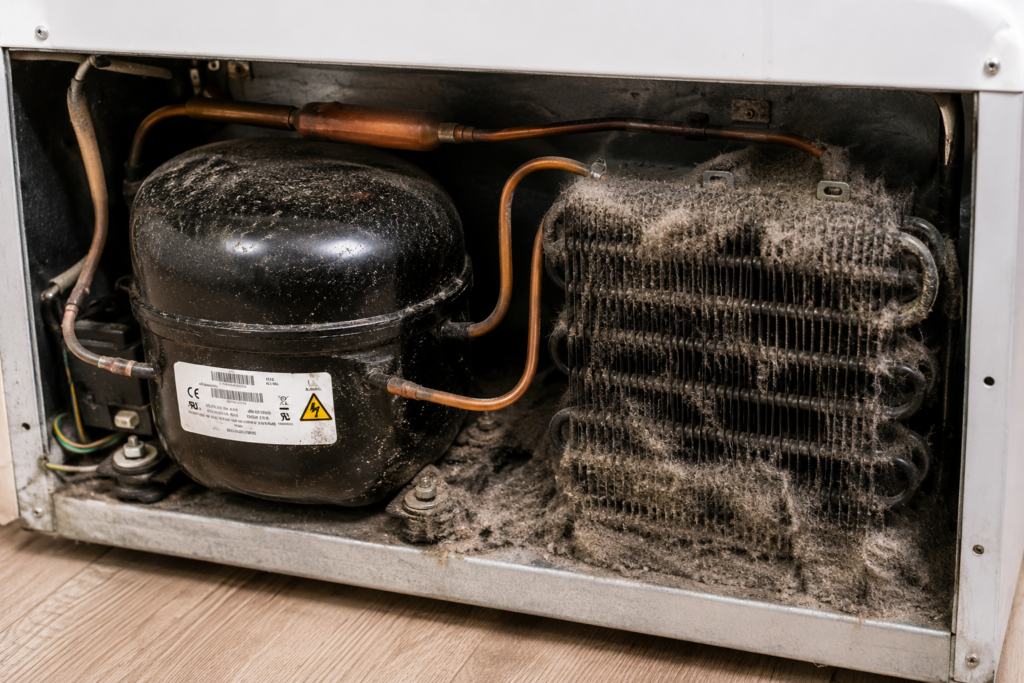
A GE refrigerator that runs continuously without shutting off normally is often struggling to maintain proper internal temperatures. Dirty condenser coils, failing thermistors, weak door seals, airflow restrictions, or control board problems can force the compressor to operate longer than intended. Many Ottawa homeowners first notice increased electricity usage before cooling performance begins to decline. Continuous operation places additional stress on the compressor and other refrigeration components, potentially leading to more expensive repairs. Testing airflow, temperature sensors, and cooling system performance helps determine why the refrigerator cannot complete normal cooling cycles.
Uneven cooling is a common GE refrigerator problem where some shelves remain cold while others become noticeably warmer. This issue is frequently linked to restricted airflow, evaporator fan problems, frost accumulation, damper assembly failures, or inaccurate sensor readings. Because modern GE refrigerators rely on controlled air circulation, even minor airflow disruptions can affect temperature consistency throughout the appliance. Ottawa homeowners may notice food spoiling faster in certain areas while other sections appear normal. Diagnosing airflow pathways and temperature regulation systems helps restore balanced cooling performance.
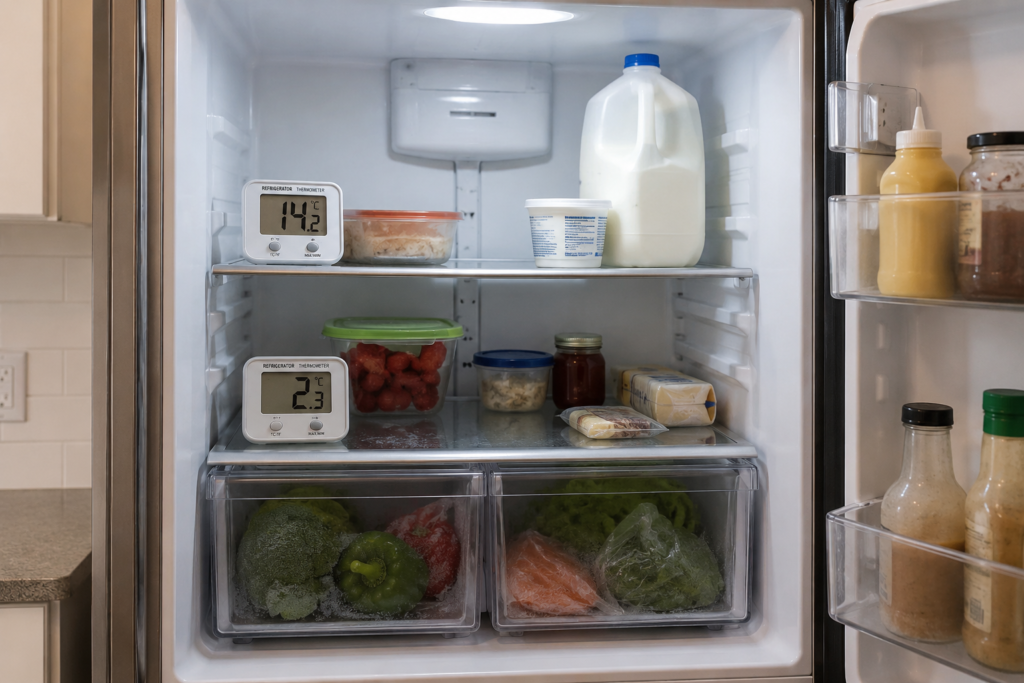
Some Bosch refrigerators develop noticeable temperature differences between shelves, drawers, or compartments. Air damper problems, evaporator fan failures, sensor issues, and airflow restrictions can all contribute to uneven cooling. Homeowners may notice that some food remains cold while other items become warm prematurely. Proper diagnosis focuses on identifying the component preventing balanced airflow throughout the refrigerator.
Buzzing, clicking, rattling, grinding, or vibrating sounds can indicate developing mechanical problems within a GE refrigerator. Common sources include evaporator fan motors, condenser fan motors, compressor start components, and internal airflow systems. While some operating sounds are normal, sudden changes in noise levels often signal a component beginning to fail. Ottawa homeowners frequently notice unusual sounds before cooling problems become apparent. Identifying the source of the noise early can help prevent more serious refrigeration system failures and reduce the likelihood of unexpected breakdowns.
Modern GE refrigerators continuously monitor temperatures, fan operation, sensors, and electronic systems. When an abnormal condition is detected, the refrigerator may display an error code identifying the affected circuit or component. Common GE error codes are associated with thermistors, evaporator fans, communication faults, and control board problems. While an error code provides a valuable starting point, additional testing is usually required to confirm the actual source of the malfunction. Proper diagnosis helps prevent unnecessary parts replacement and ensures the correct repair is performed.
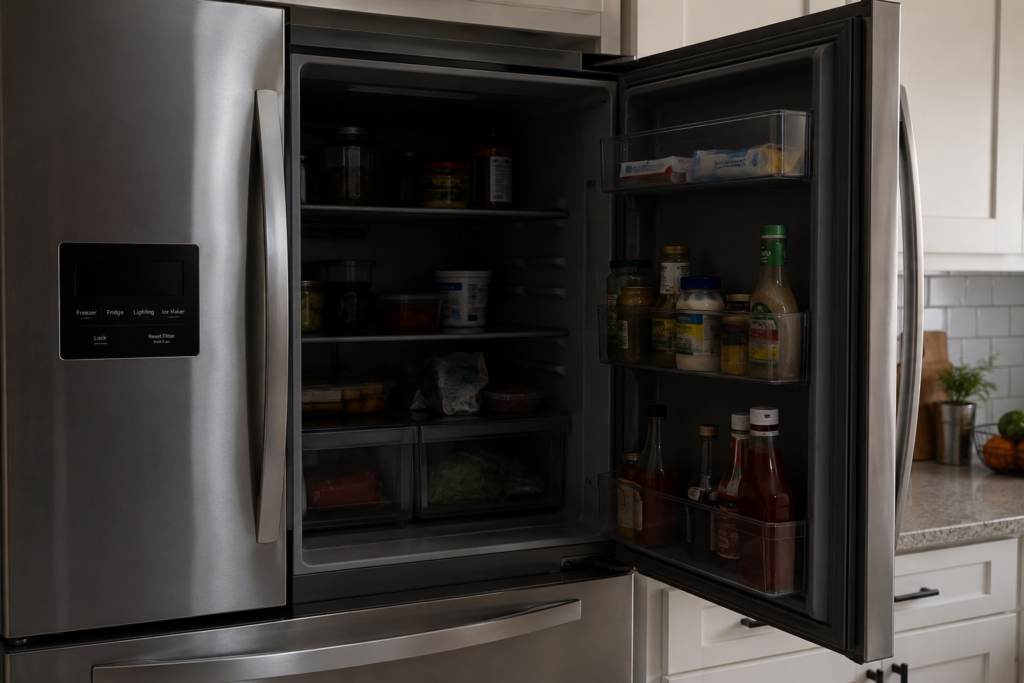
If a GE refrigerator suddenly stops operating or fails to start, the problem may involve the start relay, power supply circuit, wiring connections, compressor starting components, or the main control board. Some refrigerators may still have interior lighting while the cooling system remains completely inactive. Ottawa homeowners often assume the compressor has failed when the actual problem is a much smaller electrical component. Systematic testing of power delivery, control circuits, and compressor operation is necessary to determine the exact cause and restore normal operation.
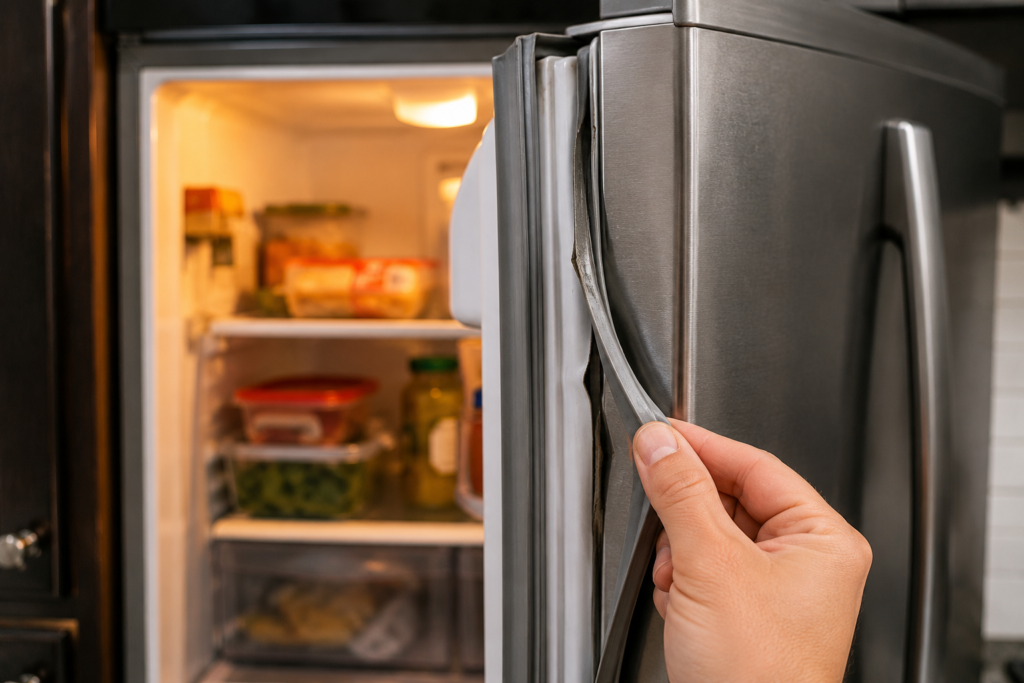
A damaged door gasket can allow warm air and moisture to enter a GE refrigerator every time the door is closed. Over time, cracked, torn, or loose seals reduce cooling efficiency, increase frost formation, and force the compressor to run longer than necessary. Many Ottawa homeowners overlook gasket problems because the refrigerator continues operating, even though cooling performance gradually declines. Inspecting the door seal is an important part of diagnosing temperature instability, excessive run times, and preventable energy loss.
COMMON GE REFRIGERATOR ERROR CODES
FF Error Code →
The FF code typically indicates that freezer temperatures have risen above the normal operating range. This can be caused by restricted airflow, frost accumulation, evaporator fan problems, or a cooling system issue. Ottawa homeowners may notice soft frozen food, temperature fluctuations, or reduced cooling performance before the code appears. Diagnosing airflow and freezer cooling components is often necessary to identify the source of the problem.
→ Diagnose GE freezer cooling problems
PF Error Code →
The PF code indicates that the refrigerator has experienced a power interruption or electrical outage. While the code itself does not usually indicate a component failure, it serves as a warning that food temperatures may have increased during the outage. If cooling does not return to normal after power is restored, additional testing of the control system may be required.
→ Check refrigerator operation after power loss
CC Error Code →
The CC code is associated with temperature control problems. The refrigerator may be unable to maintain the correct temperature because of airflow restrictions, thermistor failures, door seal problems, or cooling system faults. Homeowners often notice warmer food temperatures and extended compressor run times before the code appears. Proper diagnosis focuses on temperature regulation and cooling performance.
→ Diagnose GE temperature control issues
CI Error Code →
The CI code usually points to an ice maker communication or operation problem. Ice production may stop completely, become inconsistent, or fail to start. Common causes include ice maker assembly faults, wiring issues, water supply problems, or communication failures between the ice maker and control board. Testing both the ice system and electronic controls helps identify the exact cause.
→ Diagnose GE ice maker problems
dE Error Code →
The dE code indicates that the defrost system has not been operating correctly. As frost accumulates on the evaporator coil, airflow becomes restricted and cooling performance begins to decline. Many GE refrigerators displaying this code eventually develop frost buildup, weak airflow, or warm refrigerator compartments. Diagnosis typically includes testing the defrost heater, thermistor, and control board.
→ Diagnose GE defrost system failures
tC / tF Display Codes →
Many homeowners assume that tC or tF are error codes, but on many GE refrigerator models these indicators simply mean TurboCool or TurboFreeze mode has been activated. These modes temporarily increase cooling performance and are considered normal operation. If the codes remain active unexpectedly, checking control settings and system operation may be necessary.
→ Learn more about GE display codes
SIGNS YOUR GE REFRIGERATOR NEEDS REPAIR
Food Spoils Faster Than Usual →
One of the earliest signs of a refrigerator problem is food spoiling before its expected expiration date. A GE refrigerator may still appear to be cooling normally while internal temperatures gradually rise above safe food storage levels. Faulty thermistors, evaporator fan issues, airflow restrictions, and control board malfunctions can all contribute to inconsistent cooling. Ottawa homeowners often notice spoiled dairy products, vegetables, and leftovers before recognizing a larger refrigeration issue developing.
→ Schedule GE refrigerator diagnostics
Refrigerator Feels Warm Inside →
If the refrigerator compartment feels noticeably warmer than normal, the cooling system may no longer be maintaining the proper temperature range. GE refrigerators depend on sensors, fans, dampers, and electronic controls working together to distribute cold air evenly. A failure in any of these components can reduce cooling performance. Warm temperatures should be addressed quickly to prevent food spoilage and additional stress on refrigeration components.
→ Restore proper refrigerator temperatures
Frost Is Building Up Inside The Freezer →
Frost accumulation on freezer walls, shelves, or rear panels often indicates a problem with the automatic defrost system. GE refrigerators use heaters, thermistors, and electronic controls to remove frost during normal operation. When one of these components fails, ice begins restricting airflow and reducing cooling efficiency. Excessive frost usually becomes worse over time and may eventually affect refrigerator temperatures as well.
→ Diagnose GE defrost system problems
Water Is Collecting Under The Refrigerator →
Water beneath a GE refrigerator should never be ignored. Even small puddles may indicate a blocked defrost drain, damaged water tubing, or leaking dispenser components. Over time, moisture can damage flooring, cabinetry, and surrounding surfaces. Identifying the source of the leak early helps prevent larger repair costs and ongoing water damage inside the kitchen.
→ Locate the source of refrigerator leaks
Ice Maker Produces Little Or No Ice →
A sudden reduction in ice production is often a warning sign that part of the ice making system is beginning to fail. Problems with inlet valves, fill tubes, sensors, or the ice maker assembly itself can interrupt normal operation. Many GE refrigerators continue operating normally while ice production slowly declines, making early diagnosis important before complete failure occurs.
→ Restore normal ice production
Refrigerator Runs Longer Than Normal →
A refrigerator that rarely shuts off may be struggling to maintain proper temperatures. Dirty condenser coils, worn door gaskets, faulty thermistors, and cooling system issues can all increase compressor run time. Ottawa homeowners frequently notice increased electricity consumption before cooling performance begins to decline. Continuous operation places unnecessary wear on critical refrigeration components.
→ Check why the refrigerator runs constantly
Unusual Noises Are Becoming More Frequent →
Buzzing, clicking, rattling, or grinding sounds often indicate mechanical wear within the refrigerator. Fan motors, compressor components, and airflow systems are among the most common sources of abnormal noise. While some operating sounds are normal, changes in volume or frequency usually suggest that a component requires inspection before a larger failure develops.
→ Diagnose refrigerator noise problems
Food Freezes In The Refrigerator Section →
Fresh food freezing unexpectedly is a common sign of temperature regulation problems. GE refrigerators use thermistors, dampers, and control boards to manage airflow and cooling levels. When these systems fail, cold air may be distributed unevenly, causing vegetables, beverages, and dairy products to freeze. Temperature control issues typically worsen over time without repair.
→ Restore proper temperature control
Temperature Changes Throughout The Day →
Large temperature swings are often a sign that sensors or control systems are no longer responding correctly. A GE refrigerator may alternate between cooling normally and becoming too warm or too cold. These fluctuations can affect food quality, increase energy consumption, and place additional strain on refrigeration components. Accurate diagnosis helps identify the source of inconsistent cooling.
→ Diagnose temperature fluctuations
Error Codes Appear On The Display →
Modern GE refrigerators continuously monitor operating conditions and display error codes when a fault is detected. These warnings often point toward sensor problems, airflow issues, communication faults, or control board failures. While the code itself provides useful information, testing is still required to confirm the actual cause of the malfunction.
→ Identify GE refrigerator error codes
Refrigerator Takes Longer To Cool After Opening The Door →
If the appliance struggles to recover temperature after the door is opened, airflow restrictions or cooling system inefficiencies may be developing. Weak airflow, dirty condenser coils, evaporator fan issues, and worn door gaskets are common causes. Reduced recovery performance is often an early warning sign of declining refrigeration efficiency.
→ Test refrigerator cooling performance
Condensation Appears Around Doors Or Shelves →
Excess moisture inside the refrigerator can indicate warm air infiltration through damaged door gaskets or temperature regulation problems. Condensation often appears before frost buildup and cooling issues become obvious. Addressing the cause early helps maintain proper food storage conditions and prevents unnecessary strain on the cooling system.
→ Inspect refrigerator door seals and airflow
Why Choose Yanfix
We make appliance repair easy, fast, and reliable
Forget long waits, hidden fees, and sloppy work. At Yanfix, we treat your time and home with respect — delivering expert service you can count on.
Accurate GE Refrigerator Diagnostics →
Many GE refrigerator problems produce identical symptoms while having completely different causes. A refrigerator that is not cooling may have an airflow problem, a failed thermistor, a control board issue, or a sealed system fault. Accurate diagnosis helps identify the actual cause before repairs begin, reducing unnecessary parts replacement and helping restore reliable cooling performance.
Same-Day Service Throughout Ottawa →
Refrigerator problems can quickly lead to food spoilage and temperature-related issues. Fast diagnosis helps prevent additional stress on refrigeration components and reduces the risk of larger failures developing. Service is available throughout Ottawa for cooling problems, leaks, frost buildup, ice maker failures, and GE refrigerator error codes.
Repairs Based On The Actual Failure →
Replacing parts without confirming the cause of the problem often leads to unnecessary expenses and repeat breakdowns. Every GE refrigerator repair is based on testing and diagnosis rather than guesswork. This approach helps identify whether the issue involves sensors, airflow components, water systems, control boards, or refrigeration components.
Focused On Long-Term Refrigerator Performance →
The goal of every repair is restoring stable temperatures, proper airflow, and reliable cooling performance. Addressing the root cause of the malfunction helps reduce recurring problems, improves efficiency, and minimizes unnecessary wear on major refrigeration components.
How We Repair Bosch Refrigerators
Our local refrigerator repair technicians are on standby, ready to solve your problem today. We offer same-day refrigerator repair in Ottawa for these issues and more.
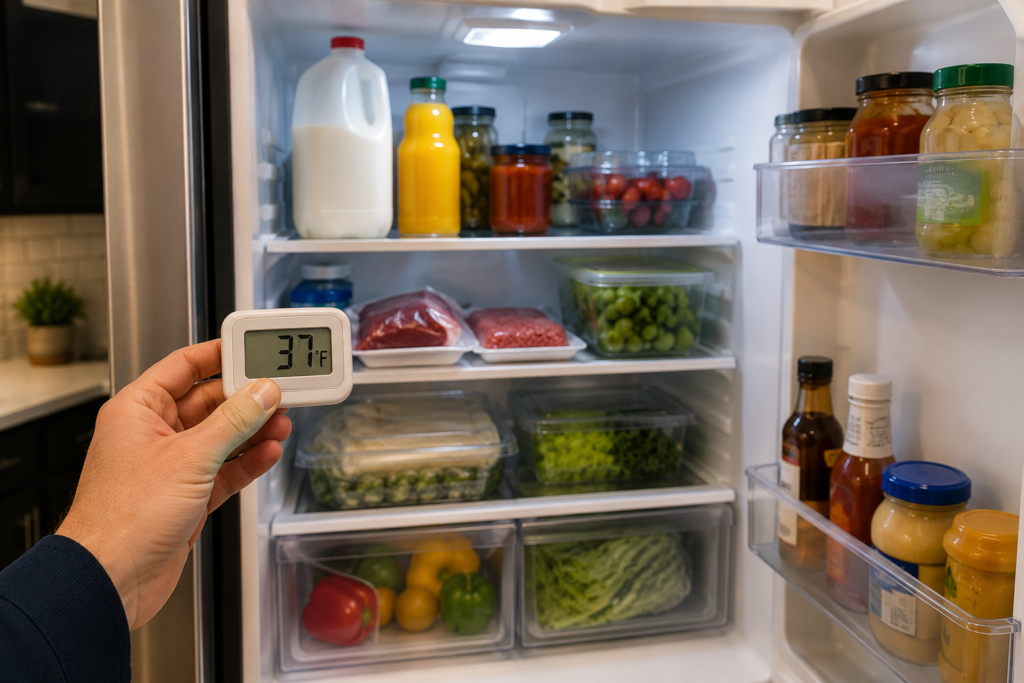
When you contact YANFIX regarding a GE refrigerator problem, we begin by gathering information about the symptoms you are experiencing. Whether the refrigerator is not cooling, leaking water, freezing food, making unusual noises, displaying an error code, or having ice maker issues, understanding the problem beforehand helps us prepare for the service visit. This initial conversation allows us to focus on the most likely GE refrigerator components and cooling systems involved.
After reviewing the symptoms, an on-site appointment is scheduled anywhere in Ottawa. GE refrigerators use advanced cooling systems, electronic controls, temperature sensors, evaporator fans, and ice maker assemblies that often require inspection under normal operating conditions. Scheduling a service visit provides enough time to evaluate cooling performance, airflow distribution, temperature regulation, and overall refrigerator operation before any repair recommendations are made.
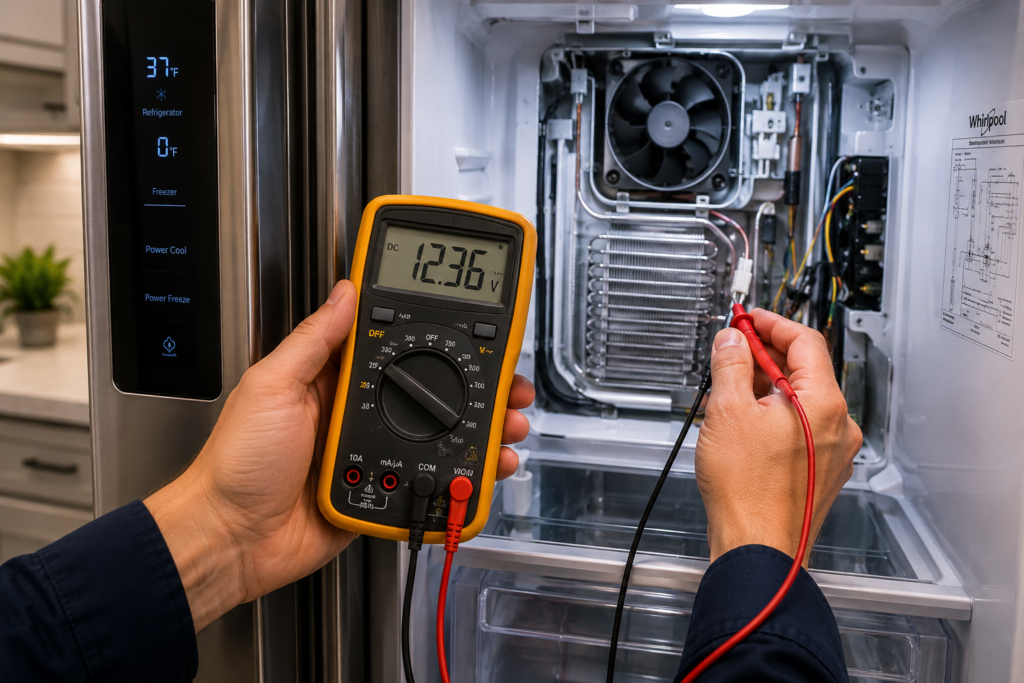
Every GE refrigerator repair begins with detailed diagnostic testing. Components such as thermistors, evaporator fans, condenser fans, compressors, control boards, defrost systems, and ice maker assemblies are inspected when necessary. Because multiple faults can produce similar symptoms, systematic testing helps identify the actual cause of the problem rather than replacing parts based on assumptions. Accurate diagnosis is the foundation of an effective refrigerator repair.
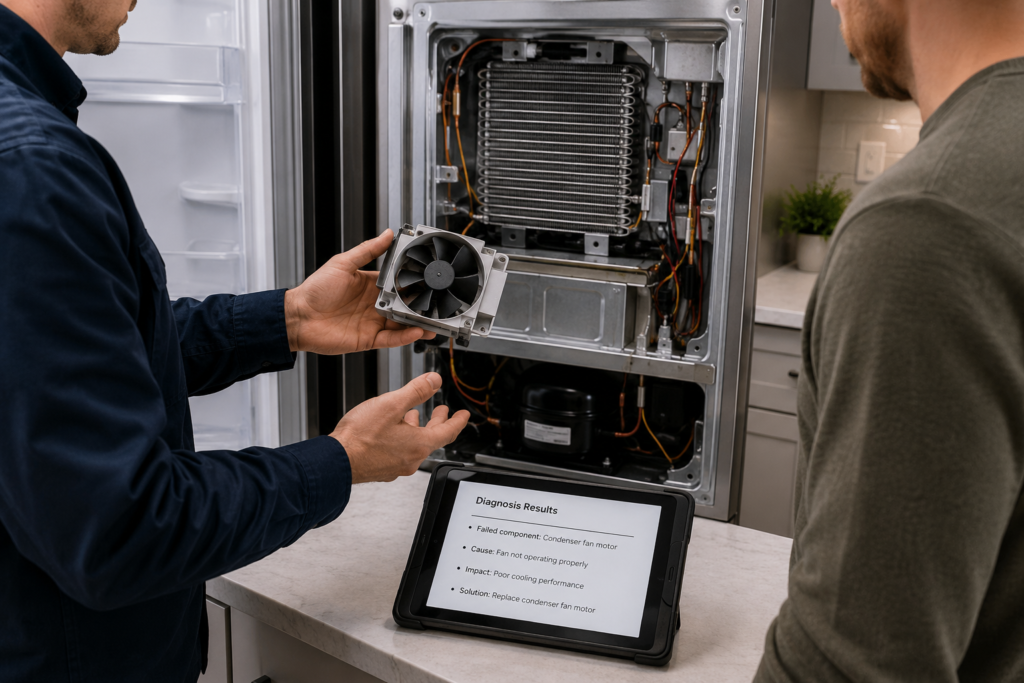
Once testing is completed, the diagnostic results are explained clearly and professionally. Customers are informed about the failed component, how it affects cooling performance, food preservation, temperature regulation, or ice production, and what repair options are available. Understanding the root cause helps homeowners make informed decisions about the next steps and prevents unnecessary repairs or unexpected costs.
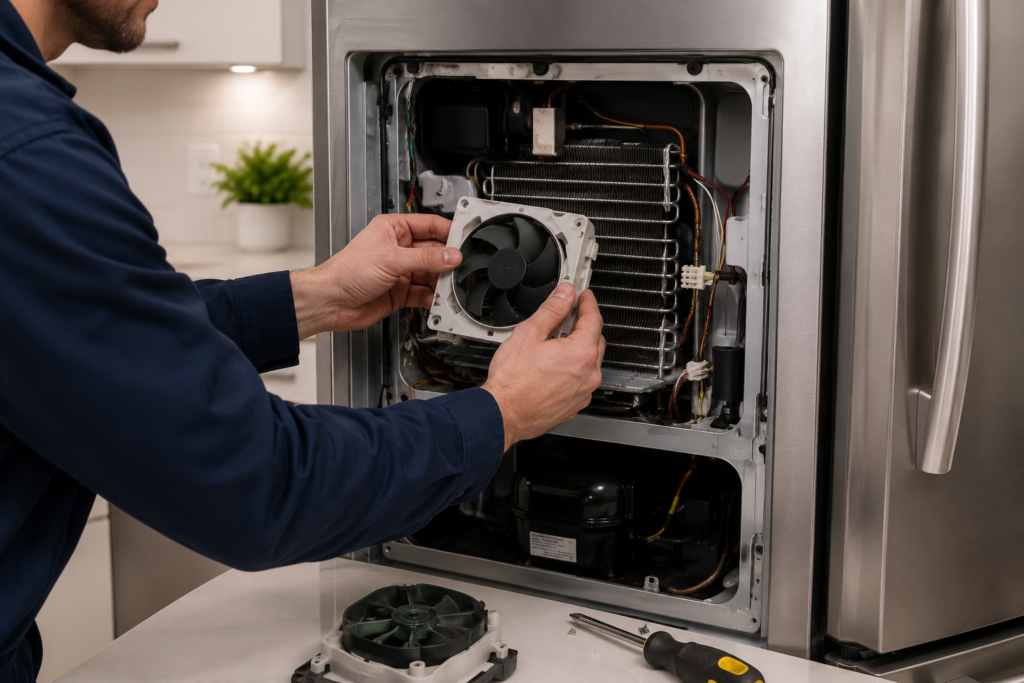
After approval, the required repair is performed using the appropriate repair procedures. Depending on the diagnosis, this may involve replacing a GE thermistor, evaporator fan motor, water inlet valve, control board, ice maker component, defrost system part, door gasket, or another refrigeration component. The goal is to restore proper cooling performance, temperature stability, airflow circulation, and overall refrigerator reliability.
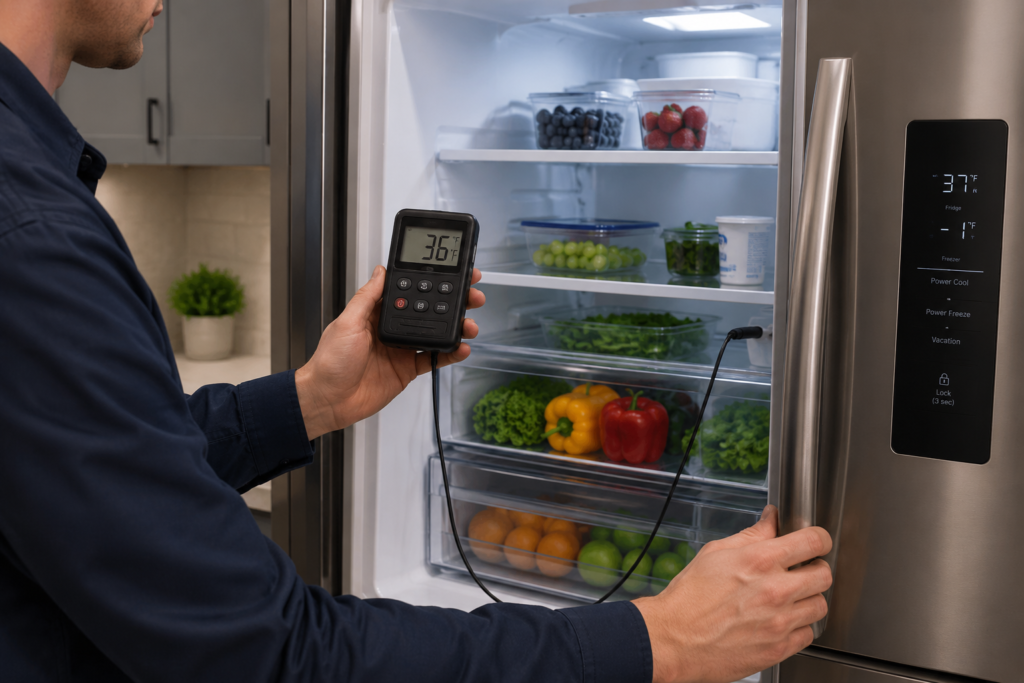
After the repair is completed, the refrigerator is tested under operating conditions. Temperature stability, cooling performance, airflow distribution, compressor operation, fan performance, and other affected functions are verified to ensure the original problem has been corrected. Final testing confirms that the refrigerator is operating normally and that all repaired systems are functioning as intended before the service visit is completed.
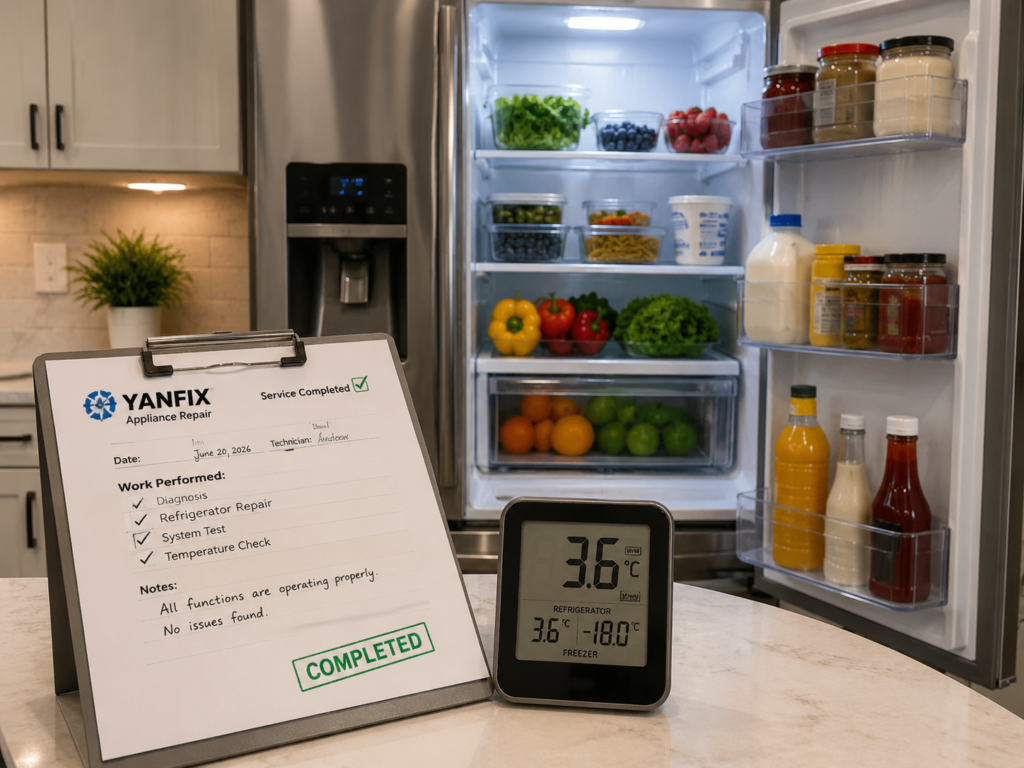
Before the appointment concludes, the completed repair is reviewed with the customer. Questions regarding refrigerator settings, temperature management, maintenance recommendations, ice maker operation, and overall system performance are addressed. This final review helps ensure that the customer understands the repair performed and the current condition of the appliance before returning it to regular household use.
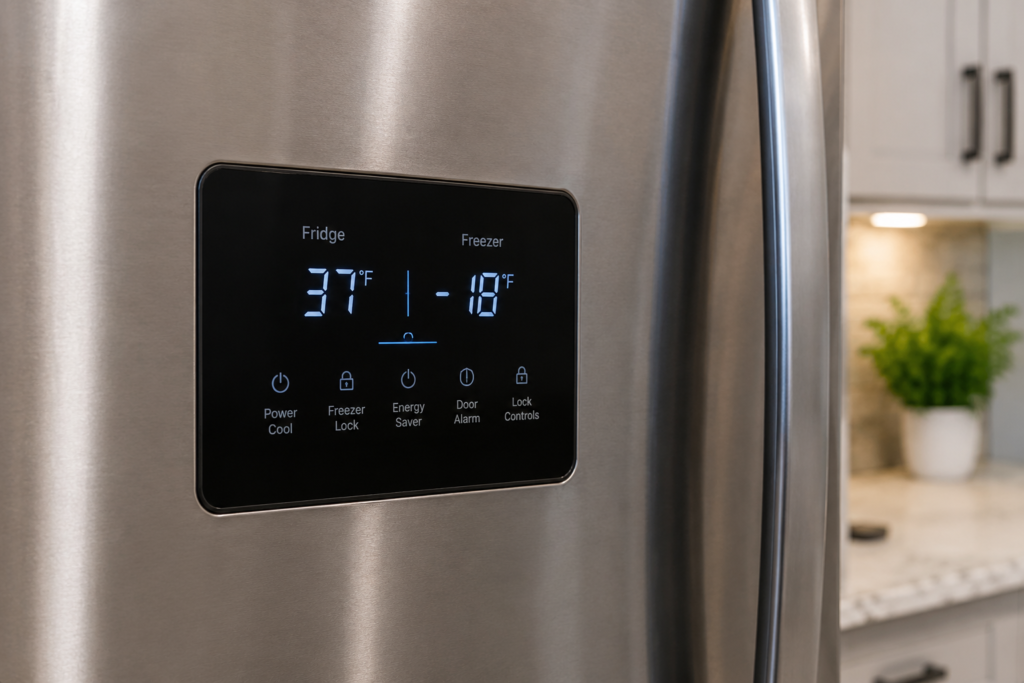
Some GE refrigerator repairs may require a short stabilization period before temperatures fully normalize. If additional questions arise after the service visit, YANFIX remains available to provide guidance regarding refrigerator operation and performance. Ongoing support helps homeowners monitor cooling results, understand normal operating behavior, and address concerns that may appear after the appliance returns to everyday use.
Real GE Refrigerator Repair Cases
GE Refrigerator Not Cooling
⚠ SYMPTOM
The customer noticed that milk, vegetables, and other fresh food products were becoming warm after only a few days. The freezer continued operating normally, but the refrigerator section remained between 9°C and 11°C despite lowering the temperature setting. Cooling performance gradually declined over several weeks, and food spoilage became a recurring issue.
🔍 CAUSE
Diagnostic testing revealed that the evaporator fan motor had failed and was no longer circulating cold air from the freezer into the fresh food compartment. As airflow decreased, temperatures inside the refrigerator section gradually increased while the freezer continued operating normally. The restricted circulation prevented consistent cooling throughout the appliance.
🛠 REPAIR
The defective evaporator fan motor was replaced. Air channels were inspected, accumulated frost was removed, and airflow performance was verified throughout the refrigerator compartment. Temperature readings were tested before and after the repair.
✅ RESULT
Cold air circulation was restored and refrigerator temperatures returned to normal operating levels. Fresh food remained properly cooled, temperature stability improved, and the refrigerator resumed normal daily operation.
📍 Location
Ottawa
🧊 Appliance
GE French Door Refrigerator
🔧 Part Replaced
Evaporator Fan Motor
GE Refrigerator Leaking Water
⚠ SYMPTOM
The homeowner repeatedly discovered water collecting underneath the refrigerator and spreading across the kitchen floor. Moisture also appeared beneath the lower crisper drawers. The leak seemed to occur every few days and became worse during warmer weather.
🔍 CAUSE
Inspection revealed a blocked defrost drain system. Melted frost produced during automatic defrost cycles could not flow properly into the drain pan. Water accumulated inside the refrigerator cabinet before eventually leaking onto the floor. Ice buildup inside the drain channel further restricted water flow.
🛠 REPAIR
The drain system was cleared, cleaned, and fully flushed. Damaged drain components were replaced and proper water flow was verified through multiple defrost cycle simulations.
✅ RESULT
Water drained correctly from the evaporator compartment and no additional leaks occurred. The customer reported completely dry floors and normal refrigerator operation after the repair.
📍 Location
Ottawa
🧊 Appliance
GE Side-By-Side Refrigerator
🔧 Part Replaced
GE Bottom Freezer Refrigerator
GE Ice Maker Not Producing Iceg
⚠ SYMPTOM
The customer noticed that ice production had stopped completely. The ice bucket remained empty for several days despite normal freezer temperatures. No water entered the ice maker during production cycles and ice harvesting never occurred.
🔍 CAUSE
Testing identified a failed water inlet valve that was no longer supplying water to the ice maker assembly. Additional inspection confirmed that the ice maker controls, freezer temperature, and electrical connections were functioning normally.
🛠 REPAIR
The defective water inlet valve was replaced and the water supply system was tested for proper flow and pressure. Multiple ice maker cycles were monitored to verify normal operation.
✅ RESULT
Ice production resumed normally and the ice maker completed full harvest cycles without interruption. The customer reported consistent ice production within the first day after the repair.
📍 Location
Ottawa
🧊 Appliance
GE French Door Refrigerator
🔧 Part Replaced
Water Inlet Valve
GE Refrigerator Running Constantly
⚠ SYMPTOM
The customer reported that the refrigerator appeared to run almost continuously throughout the day. Energy consumption had increased noticeably, and the cabinet felt unusually warm around the compressor area. Cooling performance remained acceptable but operating times were becoming significantly longer.
🔍 CAUSE
Diagnostic testing found a failing condenser fan motor combined with restricted airflow through the condenser section. Reduced heat dissipation forced the compressor to operate much longer than normal in order to maintain target temperatures inside both compartments.
🛠 REPAIR
The condenser fan motor was replaced and the condenser cooling system was cleaned. Airflow performance, compressor operation, and temperature recovery times were tested following the repair.
✅ RESULT
Compressor run times returned to normal levels and cooling efficiency improved significantly. The refrigerator maintained stable temperatures while operating much more efficiently.
📍 Location
Ottawa
🧊 Appliance
GE Side-By-Side Refrigerator
🔧 Part Replaced
Condenser Fan Motor
GE Refrigerator Repair Service Area
GE refrigerators are installed in homes throughout Ottawa and commonly develop cooling problems, ice maker failures, airflow restrictions, frost buildup, and temperature control issues as they age. YANFIX provides on-site GE refrigerator repair across Ottawa, diagnosing problems directly in the customer’s home without requiring appliance transportation. Whether the refrigerator is displaying an error code, leaking water, running constantly, freezing food, or failing to maintain proper temperatures, repairs are focused on identifying the actual cause of the malfunction and restoring reliable operation. Service is available for French door, side-by-side, top freezer, and bottom freezer GE refrigerator models throughout Ottawa.
You’ve Got Questions?
We’ve Got Answers!
Frequently Asked Questions About Bosch Refrigerator Repair
How Much Does GE Refrigerator Repair Cost in Ottawa?
The cost of GE refrigerator repair depends on the exact failure, the parts required, and the amount of diagnostic work needed to identify the problem. Common repairs involving thermistors, fan motors, water valves, and defrost components are often less complex than major refrigeration system repairs. Because several different faults can produce similar symptoms, accurate testing is usually required before repair recommendations are made. A proper diagnosis helps determine the actual cause of the malfunction and provides a clear understanding of the available repair options.
Why Is My GE Refrigerator Not Cooling Properly?
A GE refrigerator may stop cooling properly because of airflow restrictions, evaporator fan motor failures, dirty condenser coils, thermistor problems, or control board malfunctions. Some refrigerators continue running normally while temperatures slowly rise inside the fresh food compartment. Ottawa homeowners often notice warm drinks, spoiled food, or weak airflow before a complete cooling failure occurs. Since several components work together to regulate cooling performance, testing is required to identify the exact source of the problem and prevent unnecessary parts replacement.
Why Is My GE Refrigerator Not Cooling But The Freezer Still Works?
When the freezer remains cold but the refrigerator compartment becomes warm, airflow is often the main issue. GE refrigerators move cold air from the freezer into the fresh food section using an evaporator fan and damper system. Frost accumulation, blocked air passages, fan motor failures, or damper problems can interrupt this airflow. The result is a freezer that appears normal while food in the refrigerator section becomes too warm. Diagnosing airflow components usually identifies the source of the problem.
Why Is My GE Refrigerator Leaking Water?
Water leaks are commonly caused by blocked defrost drains, frozen drain channels, damaged water tubing, or issues involving the ice maker and water dispenser system. Water may collect beneath drawers, underneath the refrigerator, or directly on the kitchen floor. Small leaks often become larger over time and may eventually damage flooring or cabinets. Identifying the exact source of the leak is important because different systems inside the refrigerator can produce similar symptoms.
Why Is My GE Refrigerator Running Constantly?
A GE refrigerator that runs continuously is often struggling to maintain proper operating temperatures. Dirty condenser coils, damaged door gaskets, airflow restrictions, faulty thermistors, and cooling system problems can all increase compressor run times. Many Ottawa homeowners first notice higher electricity consumption before cooling performance begins to decline. Continuous operation places additional wear on refrigeration components and may shorten the lifespan of major parts if the underlying problem is not corrected.
Why Is My GE Refrigerator Freezing Food?
Food freezing inside the fresh food compartment is usually caused by temperature regulation problems rather than excessive cooling capacity. GE refrigerators use thermistors, electronic controls, and airflow dampers to maintain balanced temperatures. When one of these systems fails, cold air may be distributed unevenly throughout the refrigerator. Vegetables, beverages, and dairy products are often affected first. The problem may initially appear on a single shelf before spreading throughout the compartment as temperature control becomes increasingly unstable.
Why Is My GE Ice Maker Not Making Ice?
A GE ice maker may stop producing ice because of a failed water inlet valve, frozen fill tube, low water pressure, sensor failure, or a malfunctioning ice maker assembly. In some situations, ice production decreases gradually before stopping completely. Because the ice maker relies on both electrical and water supply systems, proper testing is necessary to determine the actual cause. Identifying the source of the failure helps restore normal ice production and prevent recurring problems.
Why Is My GE Refrigerator Making A Clicking Noise?
Clicking sounds can originate from compressor start components, relays, control boards, temperature controls, or other electrical systems. Occasional clicking is often normal, but repeated clicking combined with cooling issues may indicate a component failure. Some GE refrigerators produce clicking sounds when attempting to start the compressor but cannot complete the cycle. Diagnosing the source of the sound helps determine whether the refrigerator is operating normally or developing an electrical or refrigeration system problem.
What Should I Do If My GE Refrigerator Displays An Error Code?
An error code indicates that the refrigerator has detected an abnormal operating condition. Depending on the model, the code may point to a thermistor, evaporator fan, defrost system, communication circuit, ice maker system, or control board problem. Recording the code before resetting the appliance can help speed up the diagnostic process. While some codes relate to minor operating issues, others may indicate problems that affect cooling performance and food preservation.
Is It Worth Repairing A GE Refrigerator?
Many GE refrigerator problems are repairable, including failures involving thermistors, fan motors, water inlet valves, ice makers, control boards, and defrost systems. The decision depends on the age of the appliance, the condition of the refrigeration system, and the cost of the required repair. A professional diagnosis provides the information needed to compare repair costs with replacement costs and determine the most practical solution for the specific refrigerator.
RELATED REFRIGERATOR REPAIR SERVICE
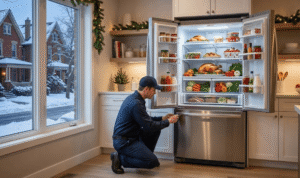
Refrigerator Not Cooling →
A refrigerator that is not cooling properly can quickly lead to food spoilage and unsafe food storage temperatures. Common causes include airflow restrictions, evaporator fan failures, thermistor problems, defrost system issues, control board malfunctions, and refrigeration system faults. Learn more about diagnosing and repairing common refrigerator cooling failures before temperatures continue to rise.
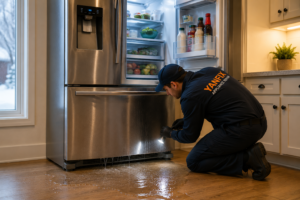
Refrigerator Leaking Water →
Water leaking from a refrigerator may be caused by a blocked defrost drain, frozen drain channel, damaged water tubing, faulty water valves, or dispenser-related problems. Early diagnosis helps prevent damage to flooring, cabinetry, and surrounding surfaces while identifying the source of the leak.
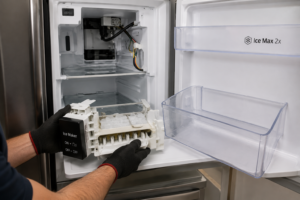
Ice Maker Repair→
Ice makers may stop producing ice because of frozen fill tubes, water supply restrictions, faulty inlet valves, sensor failures, or defective ice maker assemblies. Understanding the cause of the failure helps restore reliable ice production and prevent recurring ice maker problems.
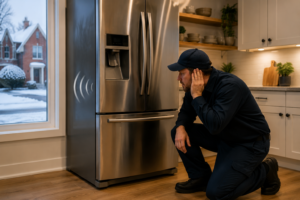
Refrigerator Making Noise →
Buzzing, rattling, clicking, humming, grinding, or vibrating sounds can indicate fan motor failures, compressor issues, airflow restrictions, or worn mechanical components. Learn what causes unusual refrigerator noises and how these faults are diagnosed before larger cooling problems develop.
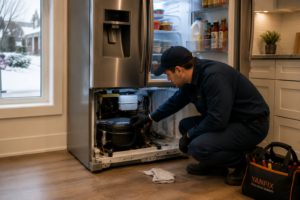
Modern refrigerators display error codes when sensors, fans, defrost systems, thermistors, or electronic controls detect abnormal operating conditions. Understanding the meaning of an error code helps identify the affected system and narrow the diagnostic process.
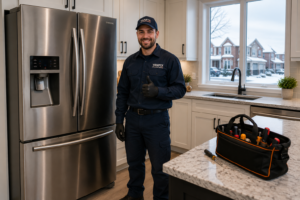
Explore our complete refrigerator repair services in Ottawa. Learn more about cooling problems, frost buildup, temperature fluctuations, water leaks, ice maker repairs, unusual noises, compressor issues, and refrigerator diagnostics for residential refrigerators.
Contact Information
Book your same-day Refrigerator & Freezer repair in Ottawa now – we’ll respond within 15 minutes.
- 18 Inwood Drive Kanata, Ontario, K2M 1Z5
- +1613913-30-23
- support@yanfix.com
Our Work Speaks for Itself
Real Repairs. Real Results.
We believe that quality is best proven in action — not just words.
Below are real examples of appliances we’ve repaired.